 Pomanique Electric Co., Ltd.

Controller
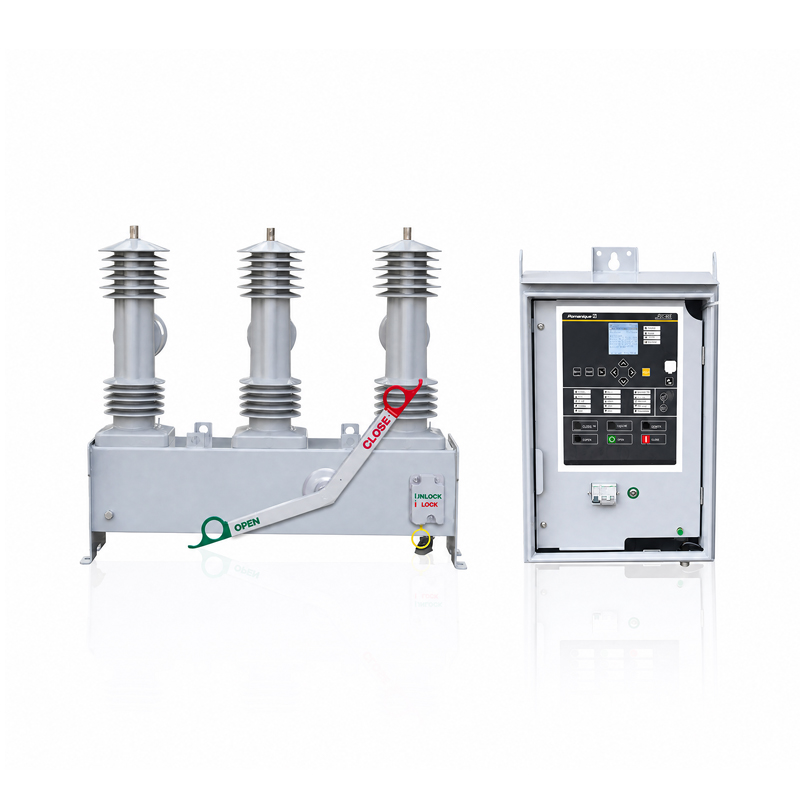
The Microprocessor Based controller provide protection, control, monitoring, instrumentation and metering with integrated input and output logic, data logging & fault reports.
Communication access to controller functionality is via electrical RS485 port for remote connection. Additional rear port options including RS232 port is available.
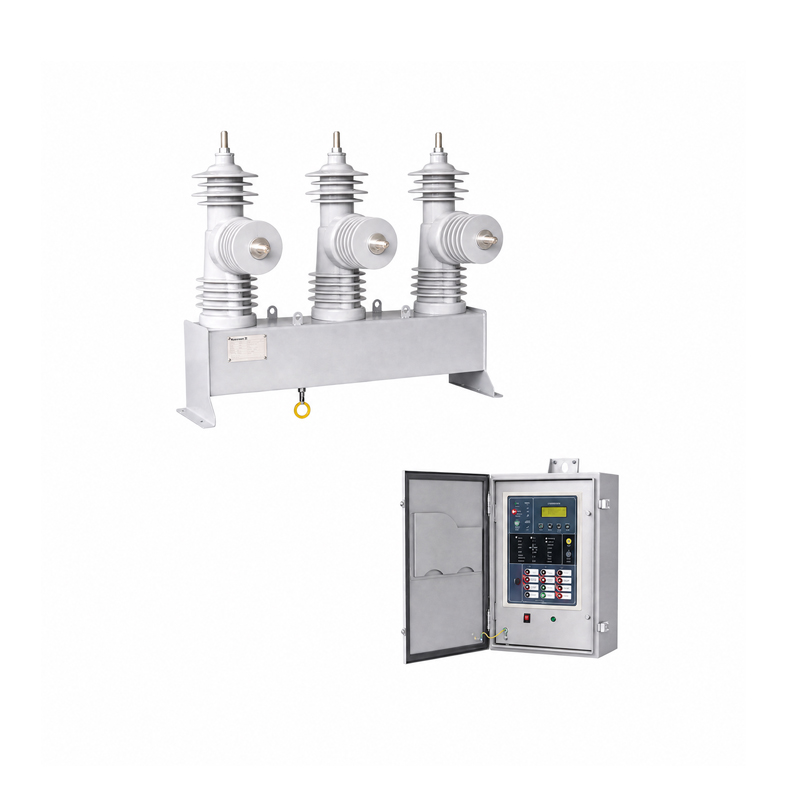
The controller is mounted in the control cubicle. Along with the controller, this cubicle also contains the auxiliary power supply with batteries for uninterruptible power supply, electronic boards and circuit breakers.
The controller contains a large number of protection functions (elements) which can be selected or deselected through the menu driven display.
2.2 Introduction
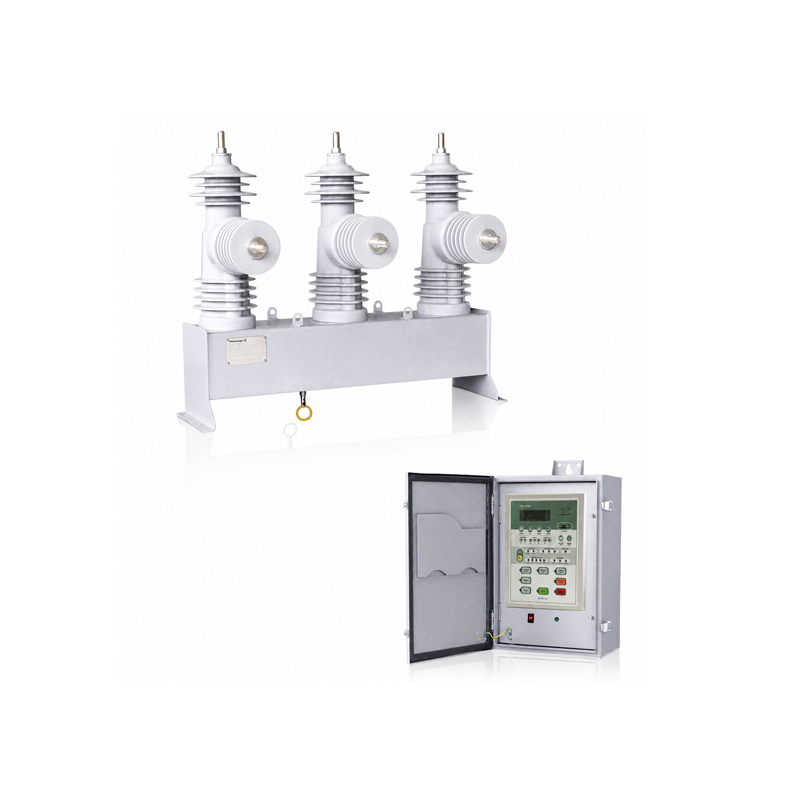
Recloser unit is connected serially to distribution line to operate open / close of the line, and Controller is in charge of measurements of currents, voltages, and other electric values, protection, control, status monitoring, recording, and communication.
In distribution power grid, Feeder Terminal Unit (FTU) is the key point to realize feeder automation. Its main function is to realize Fault Detection, Isolation and Restoration (FDIR), reducing outage time, improving reliability of power supply. Such as Recloser, Sectionalizer, and Line Fuse are adopted. Among these devices, Automatic Circuit Recloser is the most important protection device, whose main functions are fault current trip and auto reclosing.
With the continuously development of distribution automation worldwide, more and more Feeder Protection Relays are applied in overhead lines, while protecting feeder, implementing local or centralized fault self-recovery control, and by communication network, connecting to SCADA system, realizing remote functions.
This Technical Manual applies to the following range of products manufactured by Pomanique Electric :
Main features of RTU-350 controller are as follows:
Protection :
● Three-phase Non-directional Over-current Protection (ANSI 50/51)
● Non-directional Earth-fault Protection (ANSI 50N/51N)
● Three-phase Directional Over-current Protection (ANSI 67)
● Directional Earth-fault Protection (ANSI 67N)
● Sensitive Earth-fault Protection (ANSI 64N)
● Broken Conductor Protection (ANSI 46BC)
● Inrush restraint Function (ANSI 68)
● Negative-sequence over-current Protection (ANSI 46)
● Three Phase Over-voltage Protection (ANSI 59)
● Three Phase Under-voltage Protection (ANSI 27)
● Negative-sequence Over-voltage Protection (ANSI 47)
● Residual Over-voltage Protection (ANSI 59G)
● Over-frequency Protection (ANSI 81H)
● Under-frequency Protection (ANSI 81L)
● Rate of Change of Frequency Protection (ANSI 81R)
● Circuit Breaker Failure Protection (ANSI 51BF)
● Fault Locator (ANSI FLOC)
● Loss of Phase Function
● Cold Load Pickup Function
● Duty Cycle Monitoring Function
● Phase Reverse Detection Function
● Hot Line Tag
● 5 Setting Groups
Measurements :
● Phase, Ground and Sensitive Ground Current (Ia, Ib, Ic, Io, I0)
● Line and Phase Voltage on power and load side (Ua, Ub, Uc, Ur, Us, Ut)
● Residual Voltage on power and load side (Uo1, Uo2)
● Single and Three Phase Active Power (Pa, Pb, Pc, Pt)
● Single and Three Phase Reactive Power (Qa, Qb, Qc, Qt)
● Single and Three Phase Apparent Power (Sa, Sb, Sc, St)
● Single and Three Phase Active Energy (EPa, EPb, EPc, EPt)
● Single and Three Phase Reactive Energy (EQa, EQb, EQc, EQt)
● Single and Three Phase Apparent Energy (ESa, ESb, ESc, ESt)
● Single and Three Phase Power Factor (PFa, PFb, PFc, PFt)
● Frequency Magnitude and Rate (F)
● Sequence Components of Three Phase Voltages & Currents (I1, I2, Io, U1, U2, Uo)
● True RMS, Harmonics up to 11st and THD of Voltages & Currents
● Demand Currents, Voltages, Power, Energy, Power Factor, Frequency and Harmonics
● Power Quality, Load Profile, Disturbance Recorder Graphs for Analysis
● Battery Voltage (Vdc)
Control :
● Open and Close
● Local and Remote
● Reclosing Function (ANSI 79)
● Zone Sequence Coordination
● High Current Trip/Lockout
● Synchronization Check Function (ANSI 25)
● Battery Activation
● Battery Test (Healthy Condition)
● Lamp Test
● Authorization Setting
● Clear Indications, Events, Fault Records, Disturbance Records, Power Quality, Load Profile
● Function Enable/Disable: Reclosing, Protection, Group Setting, Hot Line Tag
Monitoring:
● Protection Start, Trip and Alarm
● Measurement High Alarm and Warn
● Trip Counter Limit
● Open/Close Status
● Local/Remote Status
● AC Fail & DC Fail
● Battery Low Alarm
● Battery Activation Status
● Battery Condition
● Door Open Alarm
● Device Internal Fail
Distribution Automation
● Loop Automation Scheme
● Auto-changeover Scheme
Recording :
● Trip and fault counter
● System Event Recorder - last 10,000 events
● Fault Recorder - last 1,024 faults
● Load profile recorder - last 30 days
● Disturbance Recorder - Maximum 500 cycles ×10 (128 samples/cycle)
Communication Protocols :
● Front Panel RJ45 Ethernet Port: IEC104 protocol for debugging
● Rear Panel RS232 & RS485/232 Serial Port: IEC101/DNP3.0/Modbus for remote
● Rear Panel RJ45 Ethernet Port: IEC61850/IEC104/DNP3.0/Modbus for remote
User Interface
● Large LCD (10 lines * 20 characters)
● Fault Indicators
● 16 Programmable LEDs
● 10 Programmable buttons
● Access Security(Passcode)
● RJ45 Ethernet Debugging Port