Protection works as a system
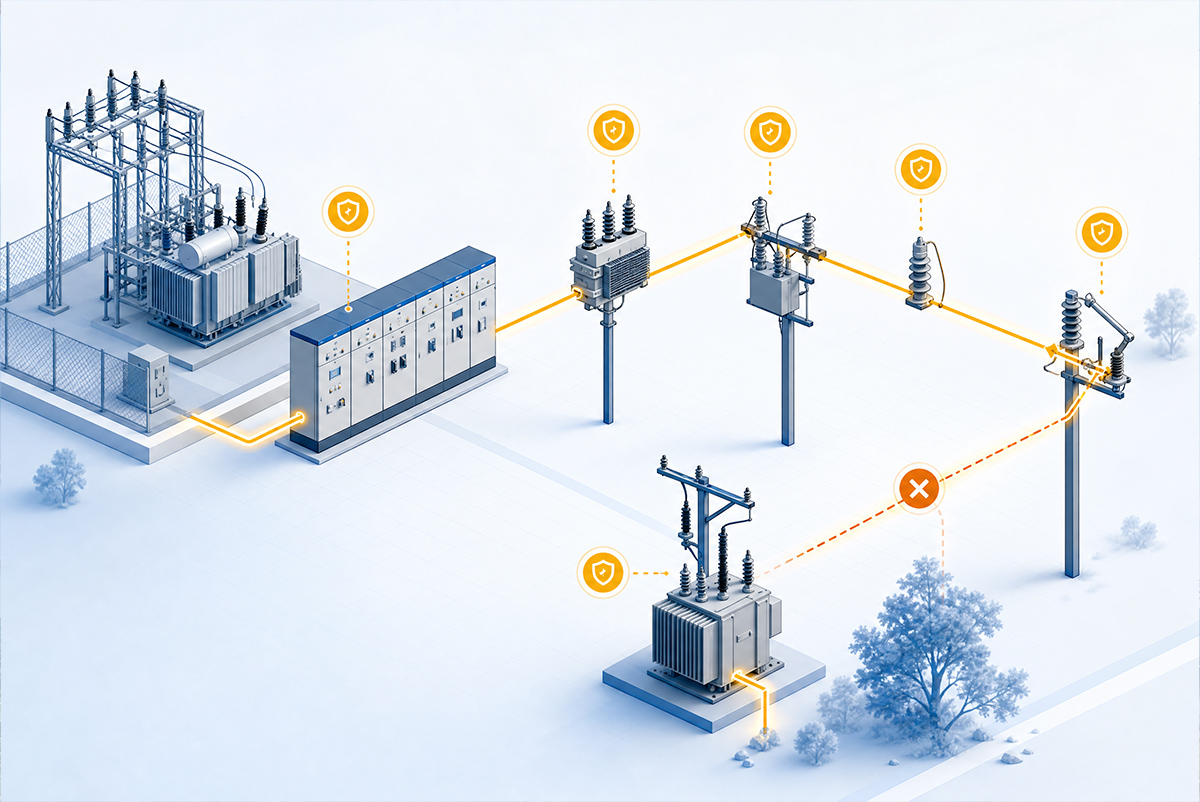
In a medium-voltage network, protection coordination is the discipline of ensuring that the device nearest a fault responds first, while healthy sections of the network remain energised whenever possible. It is one of the most important principles behind safer, more reliable power distribution.
How the devices work together
Circuit breakers, reclosers, fuse cutouts and surge arresters each have a distinct role. Reclosers can clear transient faults and automatically restore service. Fuses can isolate permanent faults on lateral circuits. Surge arresters protect insulation from over-voltage events. Their ratings and settings must be reviewed together, not independently.
- Use time-current curves to verify selectivity between upstream and downstream devices
- Confirm fault level, load current and interrupting capability at each location
- Review arrester placement and protective levels for exposed equipment
A practical coordination review
A good review begins with current network data and ends with a clear operating philosophy. Consider feeder layout, transformer capacity, expected fault types, automatic reclosing sequences and future expansion. This disciplined process protects equipment, reduces unnecessary outages and makes maintenance decisions easier for field teams.

 Pomanique Electric Co., Ltd.